

Organizational Funding Stream
The Organizational Funding stream of the Journalism Futures Fund offers multi-year funding paired with capacity strengthening support. Its goal is to increase journalism organizations’ operational and financial resilience and deepen their engagement with their audiences.
Background
The Journalism Future Fund’s Organizational Funding stream supports small-to-medium organizations that produce impactful journalism, engage their audiences, are led by members of communities that are underserved in Canadian media, and have a strong vision for their future.
Successful applicants receive multi-year funding paired with capacity-strengthening support to increase their operational and financial resilience and deepen their audience engagement.
Grants available in this stream range between $50,000 to $200,000 CAD per year over three years.
Learn more about the Journalism Futures Fund.
Read the funding guidelines for the Organizational Funding stream.
Meet the recipients of the inaugural round of the Journalism Futures Fund!
Evaluation criteria for the Organizational Funding stream:

Community Listening
A commitment to meeting the information needs of the organization’s audiences.

Journalistic Impact
A track record of journalism that meaningfully affects the lives of the audiences served.

Representative Leadership
Decision-makers from communities that are underserved in media.

Sustainability Planning
An intention to strengthen the organization’s journalistic impact, operational resilience and financial health.
Organizational Funding stream
Who can apply?
Independent journalism organizations that are registered businesses or are incorporated as a for-profit or non-profit in Canada, produce original journalism in English or French and adhere to journalistic ethics guidelines.
Funding amounts:
In the Fund’s inaugural round, three to seven organizations will receive three-year grants of $50,000 to $200,000 CAD per year, plus access to capacity-strengthening support.
Key dates:
Deadline for the inaugural round of the Fund: September 29, 2025
Additional rounds will open in the future.
Information sessions: Information sessions for the Fund’s inaugural round took place on September 10, 2025
- English: Watch the recording | Download the slides
- French: Watch the recording | Download the slides
Decision announcement: Funding recipients for the inaugural round of the Fund were announced in February 2026. Learn more here.
Official languages:
The Fund accepts applications in English or French.
Le Fonds accepte les candidatures en anglais ou en français.
Eligibility Quiz
Learn if your organization is eligible to apply to the Organizational Funding stream.
Independent Jury
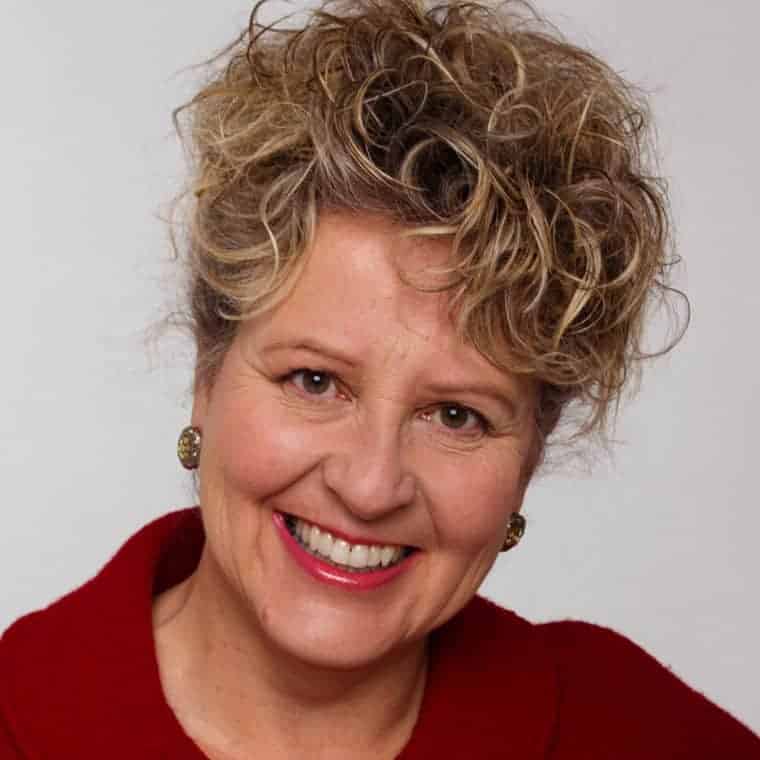
April Lindgren
April Lindgren is a professor emerita/adjunct professor at the School of Journalism at Toronto Metropolitan University and the founder and co-director of the Local News Research Project. She established and led the Local News Data Hub, a reporting initiative (2021 to 2025) that trained early-career data journalists and shored up local journalism by supplying newsrooms with data-driven stories. Lindgren co-created and manages the crowd-sourced Local News Map, which tracks changes to local news ecosystems. Her research also investigates local news poverty, the role of local journalism as critical community infrastructure, and philanthropic support for journalism. In 2025, The Walrus published her story examining what happens on the ground in communities across Canada when local news is in short supply.
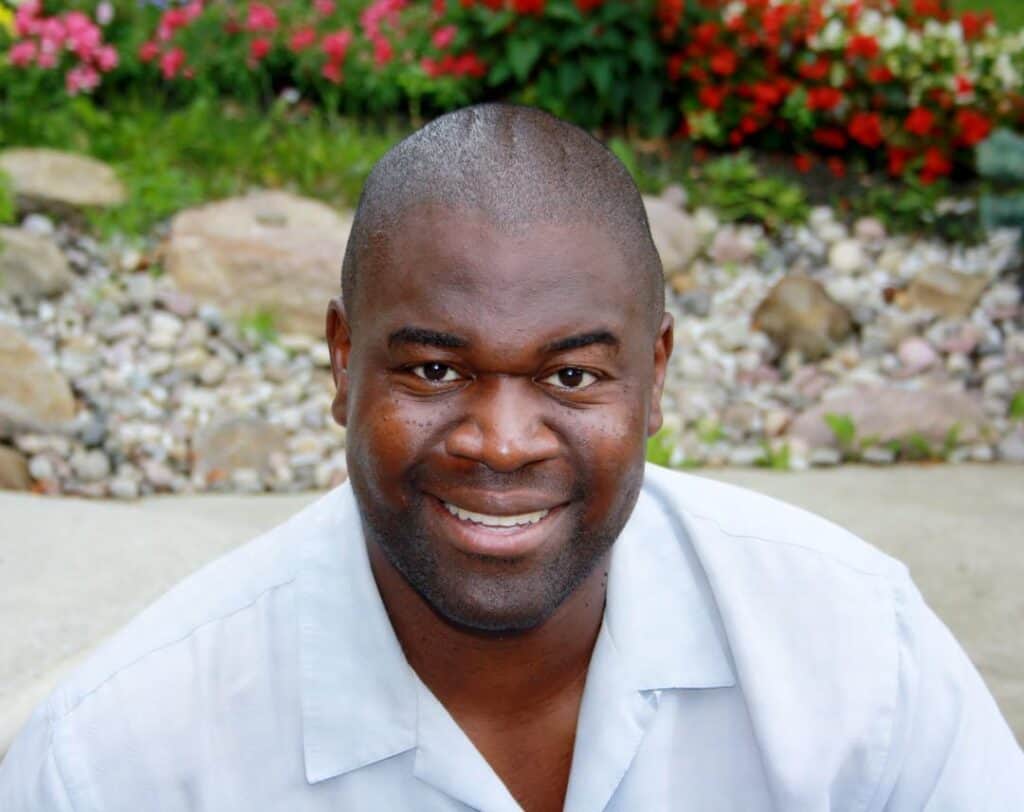
Brian Daly
Brian Daly is a bilingual journalism professor, researcher and published author with a passion for sharing his experience in educational environments. Brian teaches reporting and editing across all platforms. He loves all styles of writing and has a particular interest in video storytelling. He is currently researching media-recruiting in Canada, as well as Caribbean and Canadian media coverage of Black immigration. Brian joined the King’s faculty after nearly 30 years as a print journalist and television news producer who was twice shortlisted for RTDNA awards.
Brian has applied a passion for teaching, training and mentoring throughout his career. From 2018 to 2022 he oversaw national education programs at the Canadian Association of Black Journalists where he ran J-School Noire, a journalism camp for high-school students. Brian previously led newsroom writing seminars, taught television production to colleagues and presented a computer-assisted reporting module to Concordia University journalism students.
Cheryl McKenzie
Cheryl McKenzie is a proud Anishinaabe and Cree woman from Hollow Water and Peguis First Nations in Manitoba, and the Executive Director of News and Current Affairs at APTN.
After earning a degree in philosophy from the University of Winnipeg, Cheryl joined APTN National News as a reporter in June 2001. She became a host and producer for APTN National News in 2005. In 2007, she moved on to APTN’s current affairs program, Contact, then to APTN InFocus and APTN Investigates in 2009. She returned to daily news in 2012, and was promoted to executive show producer in 2016. She has been Executive Director of News and Current Affairs at APTN since July 2019.
Cheryl has received widespread recognition for her work at APTN. She received the 2021 RTDNA President’s Award. She’s been nominated for a Gemini and a Canadian Association of Broadcasters award, and in 2022, the Native American Journalists Association (NAJA) selected her as the recipient of the NAJA-Medill Milestone Achievement Award for exemplary people who have made substantial contributions to the field of journalism.

Colette Brin
Colette Brin is a Professor at Laval University in Quebec City, Canada and Director of Centre d’études sur les médias (CEM), a nonprofit research unit founded in 1992. Her research and teaching focus on recent and ongoing changes in journalism, through public policy and organizational initiatives, as well as citizens’ news practices. She leads the Canadian edition of the Digital News Report. Prof. Brin is co-chair of the Arts, Media and Cultural Diversity Axis at OBVIA, an international responsible AI research network based in Quebec, and a member of several research teams in Quebec and Canada. She co-authors the Canada page of the Digital News Report.
Colette is a Visiting Fellow at The Reuters Institute for the Study of Journalism where she will be working on AI initiatives in public service media, as well as youth engagement with news.
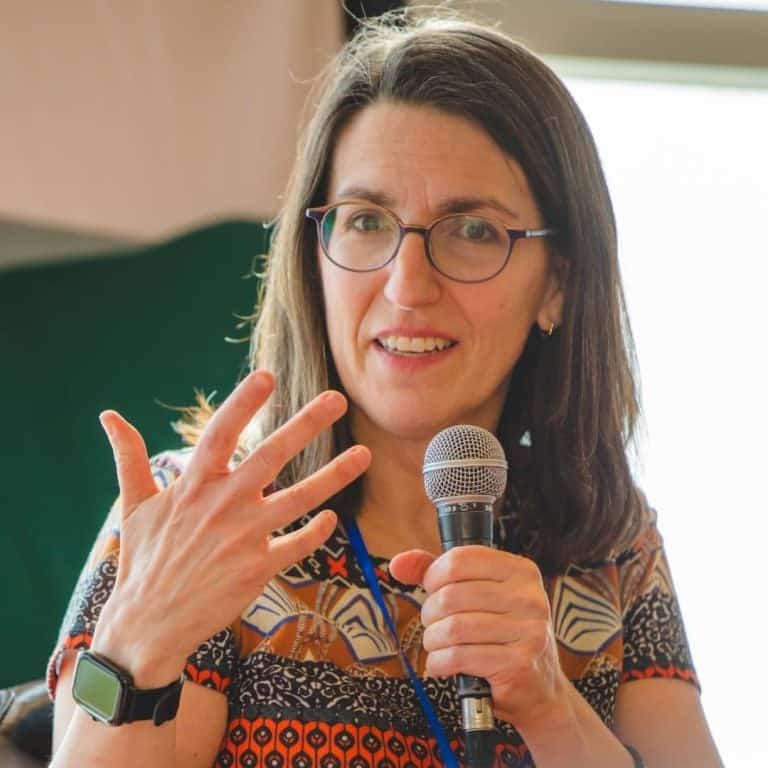
Phillip Smith
Phillip Smith is CEO of Journalism Growth Lab where he works with nonprofit and independent publishers on audience growth experimentation and revenue strategy. From 2020 to 2025 he directed Google News Initiative training programs for publishers and journalistic creators coaching more than 100 newsroom leaders. In 2025 he led the American Journalism Project Audience Discovery Accelerator working with a cohort of leading nonprofit newsrooms including Texas Tribune and VTDigger. Phillip is a former John S. Knight Journalism Fellow at Stanford University and a Mozilla Senior Fellow for Media & Trust.

Application Process
1. Eligibility quiz
A self-assessment that takes about two minutes to complete.
2. Introductory application
A set of short-answer questions about the organization and its journalism, its relationship to its audience(s), its capacity strengths, and areas for growth and its plans for the future. This should take two to three hours to complete.
3. Independent review
After a due diligence review, all applications are assessed by independent reviewers. A short list of applicants is invited to submit a full application to the Fund.
The following individuals participated as independent reviewers in the inaugural round of the Fund. We are deeply grateful for their thoughtful contributions to the process, their time and their generous expertise: Jessica Botelho-Urbanski, Grace Diffey, Trish Elliot, Kathy English, Ibrahima Gueye, LuAnn Lovlin, Pacinthe Mattar, Trina Roache, and Laurie Sarkadi.
4. Full application
Invited organizations provide detailed information on their policies, finances, governance, leadership, audiences and future planning. All candidates invited to this stage receive an honorarium.
5. Jury review
Full applications are reviewed by an independent jury. A short list of finalists may be invited to jury interviews.
6. Funding recipients
Funding recipients for the inaugural round of the Fund were announced in February 2026. Learn more here.
Need help applying?
Applying for funding can feel overwhelming, especially if you’re new to philanthropy or have accessibility needs. Please reach out to jff-fam@inspiritfoundation.org for guidance, accommodations, or other support. We’re here to answer your questions and help make the process as smooth and manageable as possible.
Download funding guidelines here.
Introductory Application
Applications are now closed. Recipients will be announced in February 2026.
FAQ: About the Organizational Funding stream
The first step is filling out a short eligibility quiz. If your organization qualifies to apply for the Fund, you can complete an introductory application, due on September 29, 2025. After a review of applications, a short list of organizations will be invited to submit a full application in fall 2025.
Please note: Applications are now closed. Recipients will be announced in February 2026.
Download a PDF of the application questions for the Organizational Funding stream here.
Note: Applications must be completed through the application portal.
In its inaugural round, the Fund will fund three to seven journalism organizations. More rounds will be announced in 2026.
Funding recipients for the Organizational Funding stream will receive three-year grants of $50,000 to $200,000 CAD per year and have access to capacity-strengthening support throughout the granting period.
Please note: Organizations may be awarded less than the total amount of funding requested. Final amounts will depend on jury decisions, incorporation status, and the terms of the funding agreement. For organizations incorporated as for-profits, any applicable taxes must be included in the total amount requested.
Yes, funding recipients of the Journalism Futures Fund Organizational Funding stream will be required to share periodic reporting on their use of this funding, for accountability and learning purposes. This may include financial reporting and written or oral reports outlining activities and milestones achieved. Recipients are expected to participate in Fund evaluation activities.